
Why Outdoor Protection Matters More Than You Think
If you've invested in an outdoor ping pong table, you already know the joy it brings. Weekend matches with the kids, backyard tournaments with friends, a reason to actually spend time outside. But here's the thing most people don't realize until it's too late: knowing how to protect your ping pong table outdoors is just as important as choosing the right table in the first place.
An unprotected outdoor table doesn't just look bad after a season or two. It plays differently. The surface warps. The bounce becomes unpredictable. The legs rust. What started as a backyard centerpiece slowly turns into an expensive eyesore that nobody wants to play on.
The good news? Protecting your table doesn't have to be complicated or expensive. With the right approach, your outdoor table can stay in tournament-ready condition for years, not just months.
The Real Cost of Neglect
Let's put some numbers to this. A quality outdoor ping pong table is a real investment, often several hundred dollars or more. Compare that to the relatively small cost of a proper protective cover and a simple maintenance routine, and the math becomes obvious quickly.
But beyond the money, think about the experience. A warped or sun-bleached table changes how the game feels. Balls bounce unpredictably. Players get frustrated. Eventually, nobody wants to play anymore, and that backyard table just collects leaves instead of happy memories.
Outdoor vs. Indoor Tables: Why the Stakes Are Higher Outside
Indoor ping pong tables are built for controlled environments. Even tables marketed as "outdoor-friendly" have limits. They can handle occasional moisture, yes, but prolonged exposure to rain, UV rays, temperature swings, and debris will degrade any surface over time.
The outdoor environment is genuinely harsh. Sunlight fades and weakens surfaces. Rain seeps into seams and swells wood. Morning dew sits on the table surface every single day, adding up to hundreds of hours of moisture contact per year. Understanding this is the first step toward protecting your investment properly.
The Biggest Threats to Your Outdoor Ping Pong Table
Before you can protect something, you need to understand what you're protecting it from. Outdoor tables face a surprisingly wide range of threats, and most of them work slowly and silently until the damage is already done.
Sun and UV Damage
This is the one most people underestimate. You might think rain is the enemy, but UV exposure is often what does the most lasting damage. Direct sunlight breaks down surface materials at a molecular level, causing fading, brittleness, and micro-cracking that you can't see until it's too late.
A table left uncovered in direct sun for a full summer will show visible surface degradation by autumn. The playing surface loses its consistent texture, which means the ball doesn't bounce the same way across the whole table. Once that happens, there's no going back.
Rain, Humidity, and Moisture
Water is relentless. Even tables with water-resistant surfaces have seams, edges, and legs that are vulnerable. Rain pools on the surface and finds every tiny gap. Humidity causes wood components to expand and contract repeatedly, which eventually leads to warping and delamination.
Morning dew is an often-overlooked culprit. Even on clear nights, condensation forms on outdoor surfaces. If your table sits uncovered, it's getting wet every single morning, even when it hasn't rained in weeks.
Dust, Debris, and Bird Droppings
Leaves, pollen, dust, and bird droppings might seem like minor annoyances, but they cause real damage over time. Organic debris holds moisture against the surface. Bird droppings are acidic and can etch into the playing surface if left long enough. Pollen and dust accumulate in hinges and folding mechanisms, making them stiff and prone to jamming.
Temperature Extremes and Freeze-Thaw Cycles
If you live somewhere with cold winters, freeze-thaw cycles are a serious concern. Any moisture that has seeped into the table's surface or structure will expand when it freezes, forcing apart layers and cracking materials from the inside out. Even a few cycles of this can cause significant structural damage.
Extreme heat is equally damaging. Tables left in direct sun on hot summer days can reach surface temperatures that cause warping and adhesive failure in laminated surfaces.
How to Protect Your Ping Pong Table Outdoors: Your Action Plan
Now that you understand what you're up against, here's the practical playbook. Knowing how to protect your ping pong table outdoors comes down to a few key habits and the right equipment. None of this is complicated, but consistency is everything.
Step 1: Cover It Every Single Time
This is the single most impactful thing you can do. Every time you finish playing, the table gets covered. No exceptions. It sounds simple, but it's the habit that separates tables that last a decade from tables that look rough after two seasons.
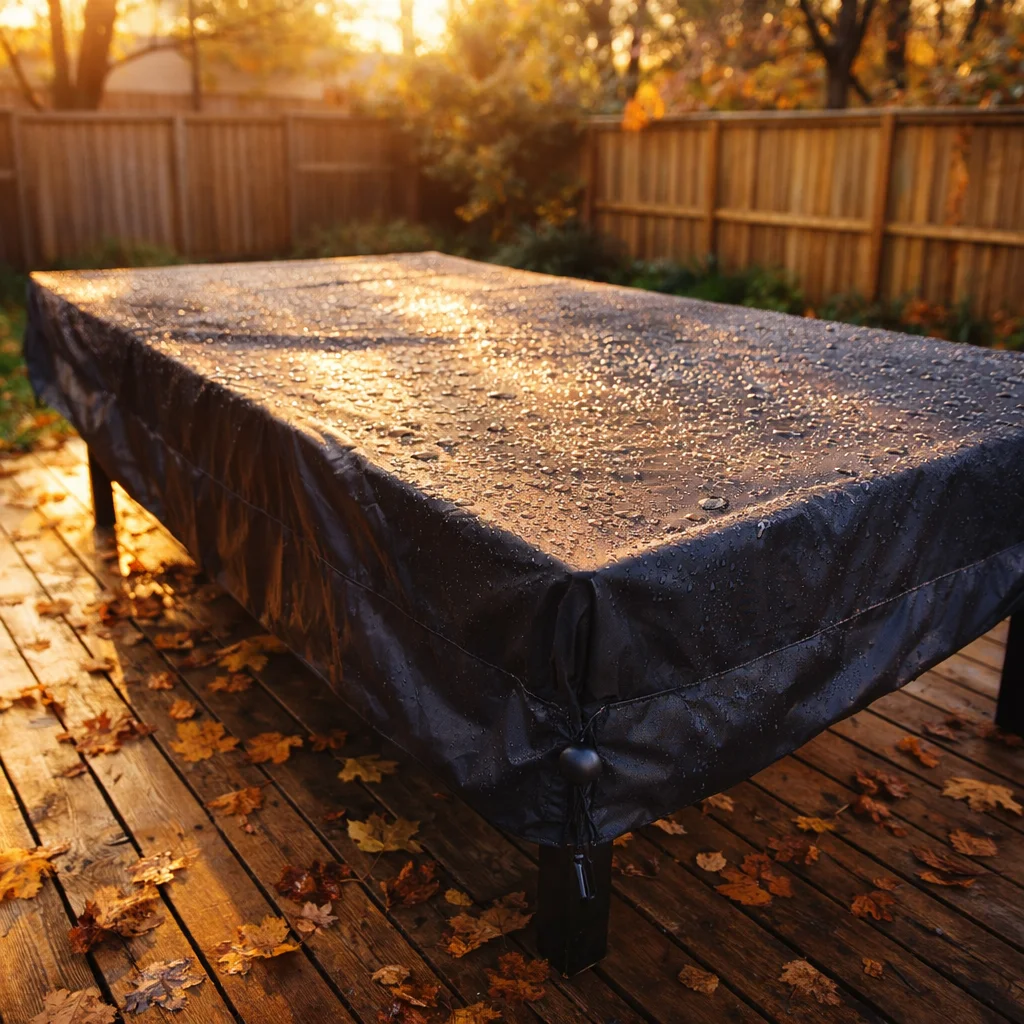
A high-quality, waterproof table cover is your first and most important line of defense. It blocks UV rays, repels rain, keeps dust and debris off the surface, and protects the table from morning dew. Think of it as a fitted suit for your table, one that keeps everything underneath in pristine condition regardless of what the weather throws at it.
Expert Tip: Keep your cover stored somewhere accessible, right next to the table if possible. The easier it is to grab and use, the more consistently you'll actually use it. Friction is the enemy of good habits.
Step 2: Position Your Table Strategically
Where you place your outdoor table matters enormously. A covered patio or pergola provides natural overhead protection that dramatically extends the life of both your table and your cover. Even partial shade from a tree can reduce UV exposure significantly.
Avoid placing the table in areas where water pools after rain. Low spots in the yard mean your table sits in standing water, which accelerates damage to the legs and base. Also consider prevailing wind direction; tables positioned where they catch strong winds are more likely to shift or tip, and covers are more likely to blow off.
Step 3: Clean Before You Cover
This step trips up a lot of people. Covering a dirty table traps debris and moisture underneath the cover, which is actually worse than leaving the table uncovered. Before putting the cover on, take thirty seconds to wipe down the surface with a dry or slightly damp cloth.
Remove any leaves, dust, or debris from the surface and from the folding mechanism. This simple habit prevents moisture from being sealed in and keeps the playing surface clean and consistent.
Step 4: Secure the Cover Properly
A cover that blows off in the wind provides zero protection. Make sure your cover has a reliable fastening system that keeps it snug against the table in all conditions. Elastic hems, drawstrings, and buckle straps all serve this purpose, and the best covers use a combination of these to stay put even in gusty conditions.
After putting the cover on, give it a quick tug to confirm it's seated properly and won't shift overnight. This takes five seconds and can save you from finding a soaked table on a rainy morning.
Choosing the Right Cover for Your Table
Not all table covers are created equal. The outdoor furniture market is full of covers that look the part but fall apart after a season. Here's what actually matters when you're choosing protection for your ping pong table.
What Makes a Cover Worth Buying
The most important quality in any outdoor table cover is genuine waterproofing. Not water-resistant, which means it can handle a light drizzle, but fully waterproof, meaning it can sit through a heavy rainstorm and keep everything underneath completely dry. There's a meaningful difference, and it shows up in real-world performance.
UV protection is the second critical factor. A cover that keeps rain out but lets UV rays through is only doing half the job. Look for covers specifically designed to block UV, not just repel water.
Durability under repeated use matters too. A cover you put on and take off every day needs to withstand that daily handling without fraying, tearing at seams, or losing its waterproofing. Cheap covers often feel fine at first but start to fail at the seams within a few months of regular use.
Why a Purpose-Built Ping Pong Table Cover Is Worth It
Generic furniture covers might seem like a budget-friendly option, but they rarely fit well. A cover that's too large flaps in the wind and pools water in the folds. One that's too small doesn't fully protect the edges and legs where damage often starts first.
A cover designed specifically for ping pong tables fits the shape properly, covering the playing surface, the net post area, and the legs without excess fabric bunching up in inconvenient places. That precise fit means better protection and a cover that stays put in wind.
Our Ping Pong Table Cover is built exactly for this purpose. It's designed to handle both indoor storage and outdoor exposure, with heavy-duty waterproofing that keeps rain, dew, and dust completely away from your table's surface. It's the kind of cover you put on once and stop worrying about the weather entirely.
Indoor vs. Outdoor Cover Needs
If you move your table between indoor and outdoor spaces depending on the season, you want a cover that handles both environments well. Outdoor use demands waterproofing and UV resistance. Indoor storage benefits from dust protection and a cover that won't scratch the surface during storage.
A dual-purpose cover eliminates the need to own two separate covers and swap between them seasonally. It simplifies your routine and ensures the table is always properly protected regardless of where it's sitting.
Seasonal Storage Tips That Actually Work
How you handle your table at the end of each season can make a bigger difference than anything you do during the playing months. A little extra care before winter or a prolonged rainy season pays dividends when you're ready to play again.
Preparing for Winter
If you live in a climate with freezing winters, the ideal scenario is moving your table indoors for the coldest months. A garage, basement, or shed provides protection from freeze-thaw cycles that no outdoor cover can fully guard against.
Before moving the table, clean it thoroughly and let it dry completely. Any moisture trapped under a cover during cold storage can cause mildew or freeze damage. Once it's clean and dry, cover it with a quality table cover even in indoor storage. Dust accumulation during months of non-use can be surprisingly significant.
If Outdoor Storage Is Your Only Option
Sometimes moving the table indoors isn't practical. Maybe it's too large for your garage, or your storage space is already at capacity. In that case, maximizing your outdoor protection setup becomes critical.
First, position the table in the most sheltered spot available: against a wall, under an overhang, or in a corner that blocks wind from multiple directions. Then use a heavy-duty waterproof cover and make sure it's secured tightly. Check on it periodically during winter storms to confirm the cover hasn't shifted.
Key Takeaway: Even the best outdoor cover is a shield, not a substitute for proper shelter. If outdoor winter storage is unavoidable, combine a quality cover with the most sheltered position you can find.
Spring Startup: Getting Your Table Ready After Winter
When playing season returns, don't just rip the cover off and start playing. Take a few minutes to inspect the table properly. Check for any signs of warping on the playing surface, test that the folding mechanism moves smoothly, and look at the legs for any rust or corrosion.
Clean the surface with a mild cleaner and a soft cloth before the first game. This removes any dust or residue that accumulated during storage and gives you a clear view of the table's condition. Catching small issues early, like a slightly stiff hinge or a minor surface scuff, means you can address them before they become bigger problems.
Building a Simple Maintenance Routine
Protecting your outdoor ping pong table isn't a one-time task. It's a simple ongoing routine that takes very little time but makes an enormous difference over the years. Here's how to build one that actually sticks.
The After-Play Checklist
Every time you finish a session, run through this quick checklist before heading inside. It takes under two minutes and becomes automatic after a few weeks.
- Wipe down the playing surface with a dry cloth to remove sweat, dust, or debris
- Remove the net and store it in a dry place (nets degrade faster than the table itself when left exposed)
- Fold the table if it has a folding mechanism, and confirm the locks are engaged
- Place the cover on and secure all fasteners
Monthly Checks During Playing Season
Once a month during the seasons you're actively using the table, do a slightly more thorough inspection. Check the legs and frame for any signs of rust or corrosion, especially at joints and connection points. Inspect the playing surface for any new chips, scratches, or areas where the surface material is lifting.
Also check your cover itself. Look for any tears, seam failures, or areas where the waterproofing seems to be degrading. A cover that's starting to fail is easy to replace. A table that's been damaged because the cover failed is a much bigger problem.
Cleaning the Table Surface Properly
Use only mild, non-abrasive cleaners on the playing surface. Harsh chemicals can strip the surface coating and damage the consistent texture that makes the table play well. A damp cloth with a small amount of mild dish soap is usually all you need for routine cleaning.
For stubborn stains, let the soapy water sit for a minute before wiping. Never scrub aggressively, and always dry the surface completely before covering. A clean, dry table under a good cover is a table that will last for years.
Common Mistakes That Shorten Your Table's Life
Even people who think they're taking good care of their outdoor ping pong table often make a few key mistakes. Here are the most common ones, and how to avoid them.
Skipping the Cover "Just This Once"
It's a clear evening. You're planning to play again tomorrow morning. The cover feels unnecessary. This is the most common mistake, and it's death by a thousand cuts. That one uncovered night might be fine. But one becomes two, and two becomes a habit. Meanwhile, the table is collecting dew every morning and UV damage every afternoon.
Make covering the table non-negotiable. Every session ends with the cover going on. No exceptions, no matter how nice the weather looks.
Using the Wrong Cleaning Products
People reach for whatever cleaning spray is handy, and that's often something far too harsh for a ping pong table surface. Bleach-based cleaners, abrasive scrubbers, and strong degreasers can all damage the playing surface in ways that aren't immediately obvious but show up in play quality over time.
Stick to mild soap and water. It handles almost every cleaning situation a ping pong table will encounter, and it won't compromise the surface integrity.
Ignoring Small Problems Until They Become Big Ones
A small rust spot on a leg. A minor lifting at the edge of the playing surface. A slightly stiff fold mechanism. These things seem minor, and they are, until they're not. Small problems compound quickly outdoors, where every rain and temperature swing pushes the damage a little further.
Address small issues immediately. A rust spot treated early stays a rust spot. Left alone, it spreads and compromises the structural integrity of the leg. A lifting edge sealed early stays cosmetic. Ignored, moisture gets underneath and causes widespread delamination.
Leaving the Net on During Storage
This one surprises people. The net seems like a small detail, but nets degrade quickly when left exposed to UV and moisture. They fade, the fabric weakens, and the tension becomes inconsistent. A net that's been left on through a winter will often need replacing come spring.
Taking the net off after each session and storing it indoors is a thirty-second task that extends the net's life significantly. It also means you're always playing with a net that's at proper tension, which matters more than most casual players realize.
Frequently Asked Questions
Can I leave my ping pong table outside all year?
It depends on your climate and how well you protect it. In mild climates with moderate rainfall and no freezing temperatures, a quality waterproof cover makes year-round outdoor storage viable. In climates with harsh winters, freeze-thaw cycles can cause damage that even the best cover can't prevent. If possible, moving the table to a sheltered indoor space during the coldest months is always the better option. If outdoor year-round storage is your only choice, invest in the best cover you can find, position the table in the most sheltered spot available, and check on it regularly during winter storms.
How often should I clean my outdoor ping pong table?
A quick wipe-down after every session is ideal and takes less than a minute. A more thorough cleaning with mild soap and water once a month during the playing season keeps the surface in top condition. Before covering the table for winter storage, do a full cleaning and let the surface dry completely before putting the cover on. Avoid letting debris sit on the surface for extended periods, as organic material holds moisture and can cause staining or surface damage over time.
What's the best way to protect ping pong table outdoors during heavy rain?
A heavy-duty waterproof cover is your primary defense. Make sure it's secured properly so it doesn't shift or blow off during wind-driven rain. If you know a major storm is coming, move the table to a covered area if possible, even temporarily under a patio overhang or into a garage. After the storm passes, check that the cover is still seated properly and that no water has pooled in folds of the cover, which can add weight and stress the table surface underneath.
How do I know if my ping pong table cover is actually waterproof?
The simplest test is to pour a small amount of water on the cover and watch what happens. On a genuinely waterproof cover, water beads up and rolls off. On a water-resistant cover, water initially beads but eventually soaks through if left long enough. On a non-waterproof cover, water absorbs almost immediately. For outdoor use, you want full waterproofing, not just water resistance. Check after the cover has been in use for several months too, as some lower-quality covers lose their waterproofing over time.
Do I need a special cover if my table is already rated for outdoor use?
Yes, absolutely. "Outdoor rated" means the table can handle some exposure better than an indoor-only table, but it doesn't mean it's impervious to damage from prolonged exposure. Even the most robust outdoor tables will show significant wear if left uncovered through seasons of rain, UV exposure, and temperature swings. A proper cover dramatically extends the life of any outdoor table, regardless of how weatherproof the manufacturer claims it is.
The Bottom Line
Learning how to protect your ping pong table outdoors is genuinely one of the best investments of time you can make as a table owner. The difference between a table that looks and plays beautifully after five years and one that's warped and faded after two comes down almost entirely to consistent protection and a simple maintenance routine.
Cover the table every time you finish playing. Clean it before you cover it. Position it thoughtfully. Do a quick monthly check during playing season. Move it indoors if you can when winter hits. These habits take almost no time but add years to your table's life.
And start with the right cover. If you're ready to give your table the protection it deserves, the Pondex Ping Pong Table Cover is built for exactly this job. Heavy-duty waterproofing, dust protection, and a design that works for both indoor storage and outdoor exposure. Put it on once and stop worrying about the weather entirely. Your table will thank you for it, every season, for years to come.