
The Real Question Nobody Asks Before It's Too Late
The ping pong table cover vs tarp debate sounds simple on the surface. One costs a few dollars and lives in your garage already. The other is a purpose-built solution that costs a little more. So why not just throw the tarp over it and call it a day?
Here's the thing: most people don't ask this question until after something has gone wrong. They pull back the blue plastic sheet one afternoon to find a warped playing surface, rust creeping up the legs, or a film of moisture that has soaked into the wood and quietly destroyed the table's bounce. By then, the damage is done.
This guide is for anyone who wants to make the right call before that moment arrives. Whether your table lives on a covered patio, in a basement, or in a backyard shed, the protection you choose now determines how many years of good games you get out of it.
Why Table Protection Matters More Than Most People Realize
A ping pong table is not a cheap piece of equipment. Even a mid-range table represents a real investment in your home and your family's enjoyment. The playing surface is engineered to deliver consistent ball bounce, and that engineering is surprisingly fragile when exposed to the wrong conditions.
Moisture is the primary enemy. It causes the playing surface to warp, swell, and lose its flatness. Once a table warps, the ball no longer bounces predictably, and no amount of drying or fixing will restore it to factory condition. Dust and debris are the secondary threat, grinding into the surface over time and dulling the finish that makes fast, accurate play possible.
Indoor Tables Are Not Safe Either
A lot of people assume that if their table is indoors, they don't need to worry about protection. That assumption leads to a lot of ruined tables. Basements cycle through humidity changes with the seasons. Garages are exposed to temperature swings, dust from cars and tools, and occasional moisture intrusion.
Even in a finished living space, an uncovered table collects dust that scratches the surface every time someone wipes it down. Protection is not just an outdoor concern. It's a year-round responsibility for anyone who wants their table to perform at its best for years to come.
What a Tarp Actually Does (And Doesn't Do)
Let's give the tarp a fair hearing. It's a legitimate tool, and it does some things well. Understanding its actual strengths and limitations is the only way to make an honest comparison.
What Tarps Do Well
Tarps are excellent at blocking direct rain and heavy debris. If a sudden storm rolls in and you need to throw something over your outdoor table quickly, a tarp in the garage is better than nothing. They're also cheap, widely available, and easy to replace if they tear or get lost.
For truly temporary coverage, like covering a table during a single outdoor event while you grab food, a tarp does the job. It's a blunt instrument, but blunt instruments have their place.
Where Tarps Fall Short
The problems start when people use tarps as a long-term solution. Standard tarps are not fitted to the shape of a ping pong table. They bunch up at the edges, leaving gaps where wind can push moisture underneath. They pool water on top, and that pooled water eventually finds its way to the surface through condensation and capillary action.
Tarps also trap heat and moisture underneath them. On a warm day, the air beneath a tarp becomes a humid microclimate. That trapped humidity is exactly what causes wood to swell and warp. You can actually do more damage with a poorly fitted tarp than you would leaving the table uncovered in many situations.
There's also the issue of abrasion. Tarps are stiff and often have rough textures on the underside. Every time the wind moves the tarp slightly, it drags against the playing surface. Over time, this creates fine scratches that degrade the finish and affect ball response.
Key takeaway: A tarp protects against direct rain. A dedicated cover protects against everything else, including the damage a tarp itself can cause.
The Condensation Problem Nobody Talks About
This is the silent killer of tarp-covered tables. When warm, humid air gets trapped under a tarp and the temperature drops at night, that moisture condenses directly onto the table surface. You pull back the tarp in the morning and the table feels dry, but the damage has already been happening at a microscopic level.
This cycle of condensation and drying, repeated over weeks and months, causes the playing surface to delaminate from the inside out. The table looks fine until one day it doesn't, and by then there's no going back.
What a Dedicated Ping Pong Table Cover Does Differently
A purpose-built ping pong table cover approaches protection from a completely different philosophy. Instead of just blocking rain, it's designed to manage the full range of threats a table faces over its lifetime.
The Fit Makes All the Difference
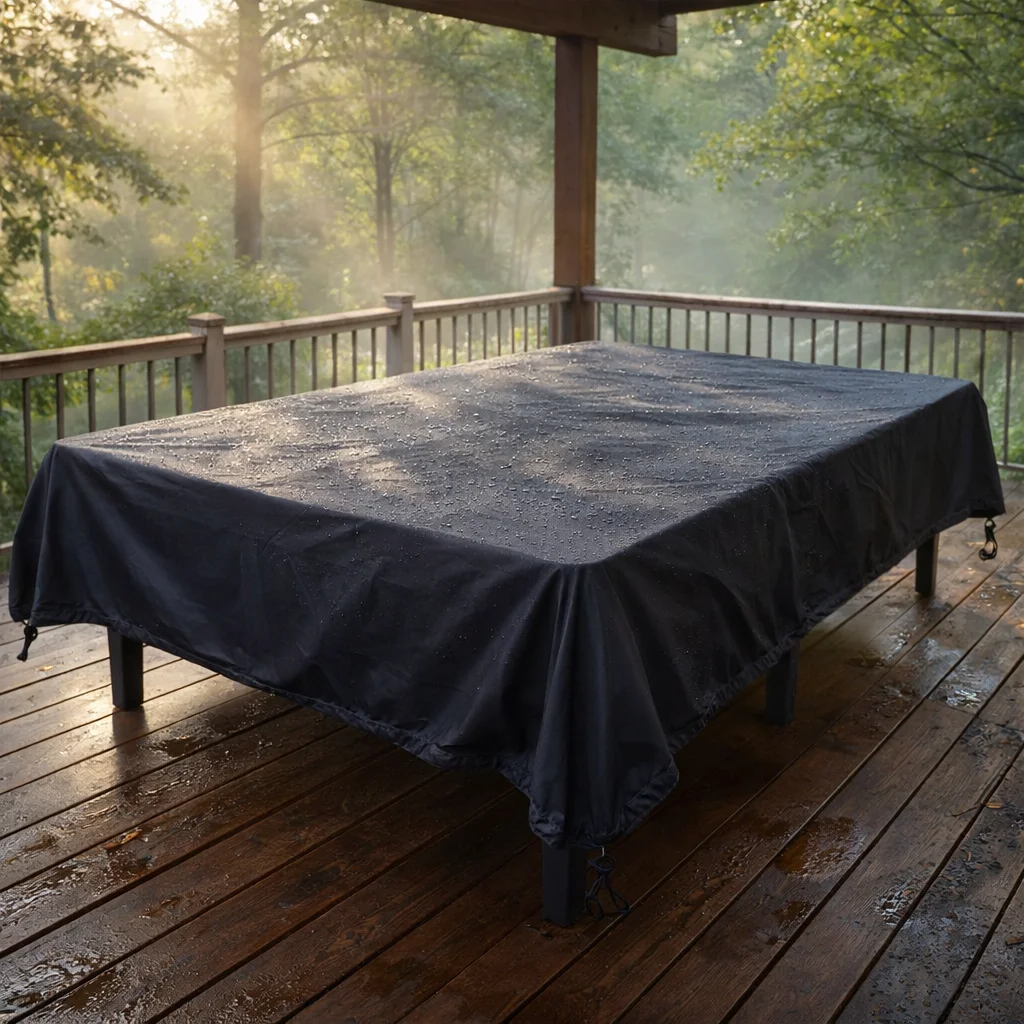
A dedicated cover is shaped to follow the contours of a ping pong table. It sits snugly over the surface and sides without bunching, pooling, or leaving gaps. That snug fit means wind can't get underneath to flap the cover against the surface, and rain can't find a gap to sneak through.
The fit also means the cover stays in place without needing to be weighted down or tied off. Anyone who has chased a tarp across a backyard on a windy day knows exactly why this matters. A cover that stays put is a cover that's actually protecting your table.
Breathability vs Waterproofing: How Good Covers Balance Both
This is where dedicated covers earn their value. The best covers manage to be waterproof on the outside while still allowing moisture vapor to escape from underneath. This prevents the condensation trap that makes tarps so damaging in temperature-variable environments.
The result is a table that stays dry in the rain but doesn't bake in trapped humidity. It's a balance that a simple tarp can never achieve because tarps are designed for one thing: keeping water out. They're not designed to let moisture breathe.
Surface Protection That Goes Beyond Weather
A quality cover also protects against dust, pet hair, insects, UV fading, and accidental scratches from items placed on the table. In a garage or basement setting, this matters enormously. Sawdust from a workbench, grit tracked in from outside, or even just the fine particulate that settles everywhere in a storage space can work its way into the playing surface over time.
The Pondex Ping Pong Table Cover is built specifically for this kind of complete protection. It's designed for both indoor and outdoor use, so whether your table is on a patio or in a finished basement, you're getting the same level of care for your investment.
Ping Pong Table Cover vs Tarp: A Real-World Comparison
Let's put these two options side by side in the situations where most people actually use them. Real-world performance is what matters, not theoretical specs.
Outdoor Storage: The Toughest Test
For a table stored on an exposed patio or deck, the difference between a tarp and a dedicated cover becomes obvious within a single season. A tarp will handle the first few rainstorms fine. But as UV exposure degrades the plastic, as wind repeatedly lifts and drops the cover, and as condensation cycles do their work underneath, the tarp becomes a liability rather than an asset.
A fitted cover handles outdoor storage with confidence. It sheds rain cleanly, stays in place through wind, and doesn't trap the heat and moisture that cause warping. For outdoor tables, a dedicated cover is not a luxury. It's the minimum standard of care.
Garage and Basement Storage: Where People Get Surprised
Most people assume their garage or basement table doesn't need serious protection. This is where the tarp-versus-cover debate gets interesting, because the threats in these environments are different from outdoor ones.
In a garage, the main threats are dust, grit, temperature swings, and occasional humidity spikes. A tarp can block dust, but it can't breathe, so it traps humidity during warm spells. A dedicated cover handles all of these threats without creating new ones. For basement storage, where humidity is often the primary concern, the breathability of a good cover is especially important.
Occasional Use vs Long-Term Storage
If your table gets used several times a week, you're putting the cover on and taking it off constantly. A tarp is awkward for this. It's heavy, it bunches, and it takes time to fold and store properly. A fitted cover goes on and comes off in seconds, which means you're actually more likely to use it consistently.
Consistent use is the whole point. A cover you only put on when you remember to is not doing its job. A cover that's easy and quick to use becomes a habit, and habits are what protect your table over the long run.
Expert tip: The best cover is the one you actually use every time. If your protection solution is inconvenient, you'll skip it on busy days, and those are often the days when conditions are most damaging.
When a Tarp Might Actually Work for You
Fairness requires acknowledging that there are situations where a tarp is a reasonable choice. Not every situation calls for the same solution.
Emergency and Temporary Coverage
If you're hosting an outdoor party and need to cover the table during a brief rain shower, a tarp is perfectly fine. If your dedicated cover is damaged and you're waiting for a replacement, a tarp for a day or two won't cause lasting harm. The key word is temporary.
Tarps are excellent emergency tools. The mistake is treating an emergency tool as a permanent solution. Keep a tarp around for unexpected situations, but don't rely on it as your primary protection strategy.
Tables You're Planning to Replace Soon
If you have an older table that's already showing wear and you're planning to replace it within the year, spending money on a quality cover may not make financial sense. In this case, a tarp to keep the table usable until replacement is a practical choice.
But if you're protecting a table you intend to keep for five, ten, or fifteen years, the math changes completely. A quality cover pays for itself many times over in extended table life.
Very Sheltered Indoor Environments
A table in a climate-controlled finished room with low dust and stable humidity might be adequately served by almost any covering. In this specific scenario, the difference between a tarp and a dedicated cover is smaller. Even so, a fitted cover is easier to use and gentler on the playing surface, so it remains the better choice even when the stakes are lower.
How to Choose the Right Cover for Your Table
Once you've decided that a dedicated cover is the right move, the next question is what to look for. Not all covers are created equal, and knowing what matters helps you avoid wasting money on something that won't hold up.
Waterproofing That Actually Works
True waterproofing means water beads up and rolls off rather than soaking through. Test this when your cover arrives by pouring a small amount of water on the surface. It should bead immediately and run off cleanly. If the fabric absorbs the water or lets it seep through slowly, the waterproofing is inadequate for outdoor use.
Look for covers that specifically describe heavy-duty waterproof construction. Light-duty covers may handle indoor dust fine but will fail quickly in an outdoor environment where rain and morning dew are regular occurrences.
Fit and Secure Attachment
A cover that doesn't stay in place is barely better than no cover at all. Look for designs that include some form of secure attachment, whether that's elastic edges, drawstrings, or buckles. The cover should be snug enough that moderate wind won't lift it but easy enough to remove that you'll use it every time.
Also consider whether the cover accommodates your table in both folded and unfolded positions. Many people store their table folded upright, and a cover designed for a flat table won't work in that configuration. Check that the cover you choose matches how you actually store your table.
Indoor and Outdoor Versatility
The best covers work equally well in both environments. This matters because tables often move between settings. You might play indoors in winter and move the table to the patio in summer. A cover that handles both means you never have to think about whether you have the right protection for the current situation.
The Pondex Heavy Duty Ping Pong Table Cover is designed for exactly this kind of versatility. It protects against outdoor weather and indoor dust with equal effectiveness, so your table is covered no matter where it lives.
Making Your Investment Last: Cover Care Tips
A good cover is itself an investment worth protecting. With minimal care, a quality cover can last as long as the table it protects.
Cleaning Your Cover
Most covers can be wiped down with a damp cloth for regular cleaning. For deeper cleaning, a mild soap solution and a soft brush work well. Avoid harsh chemicals or abrasive scrubbers, which can degrade the waterproof coating over time.
Let the cover dry completely before folding and storing it. Storing a damp cover folded up is a fast way to develop mildew, which can transfer to your table surface. A few minutes of drying time saves a lot of headaches.
Storing the Cover When Not in Use
When you take the cover off for a game, fold it loosely and store it somewhere clean and dry. Avoid cramming it into a tight space where it stays compressed, as this can create permanent creases that affect how well it fits when you put it back on.
If you have a storage bag for the cover, use it. Keeping the cover clean while it's not in use means it's not transferring dust or debris to your table surface when you put it back on.
Inspecting for Wear
Once a season, take a few minutes to inspect your cover for small tears, worn seams, or areas where the waterproofing seems to be degrading. Catching these issues early means you can address them before they compromise your table's protection.
Small tears can often be repaired with waterproof tape or a patch kit. A seam that's starting to separate can be reinforced before it fails completely. Regular inspection turns a small maintenance task into something that takes five minutes rather than a table replacement project.
Pro tip: Mark your calendar for a cover inspection at the start of spring and the start of fall. These seasonal transitions bring the biggest weather changes, so it's the best time to make sure your protection is in top shape.
Frequently Asked Questions
Can I use a regular tarp as a long-term ping pong table cover?
You can, but it's not recommended for anything beyond very short-term use. Tarps are not fitted to the shape of a ping pong table, which means they leave gaps for moisture and wind. They also trap humidity underneath, which can cause the playing surface to warp over time. For temporary emergency coverage, a tarp is fine. For ongoing protection, a dedicated cover is a much better investment.
Do I need a cover if my ping pong table is kept indoors?
Yes. Indoor tables are exposed to dust, humidity fluctuations, and temperature changes that can degrade the playing surface over time. Dust particles in particular can scratch the finish when the table is wiped down. A cover also protects against accidental spills and items being placed on the surface. Indoor tables benefit from protection just as much as outdoor ones, just from different threats.
How do I know if a ping pong table cover is truly waterproof vs just water-resistant?
The simplest test is to pour a small amount of water on the cover and watch what happens. Truly waterproof covers cause water to bead up immediately and roll off the surface. Water-resistant covers may bead initially but will eventually allow moisture to seep through, especially under sustained rain or pooling. For outdoor use, you want genuine waterproofing, not just water resistance.
Should my cover fit a folded or unfolded table?
This depends on how you store your table. Many people store their table folded upright to save space, while others leave it flat and ready to play. Before purchasing a cover, check whether it's designed for a flat table, a folded table, or both. Some covers are versatile enough to work in both configurations, which is ideal if your storage situation changes seasonally.
How often should I replace my ping pong table cover?
A quality cover should last several years with proper care. Signs that it's time to replace your cover include visible tears that can't be patched, seams that have separated significantly, or waterproofing that no longer causes water to bead. If you notice moisture getting through to your table surface despite having a cover in place, that's a clear sign the cover has reached the end of its useful life.
The Bottom Line
The ping pong table cover vs tarp debate really comes down to this: a tarp is a tool for emergencies, and a dedicated cover is a tool for protection. They're not the same thing, and treating them as interchangeable is how good tables get ruined.
If you've invested in a ping pong table, whether it's for serious competitive play or just family fun on a summer afternoon, that table deserves to be protected properly. The cost of a quality cover is a fraction of the cost of replacing a warped or damaged table, and the peace of mind of knowing your table is genuinely protected is worth something on its own.
A tarp might be sitting in your garage right now, and it might seem like the obvious no-cost solution. But the condensation it traps, the abrasion it causes, and the gaps it leaves are working against your table every day it's in place. The better choice is clear.
Ready to give your table the protection it deserves? The Pondex Ping Pong Table Cover is built for exactly this purpose: heavy-duty waterproof protection for both indoor and outdoor tables, designed to stay in place, breathe properly, and keep your playing surface in peak condition for years to come. Your future self, pulling back a perfect cover to reveal a table that plays exactly as well as the day you bought it, will thank you for making the right call today.